Addiction and Recovery in Alaska Native Communities: Understanding and Healing Together
Substance use disorder has had profound impacts on Alaska Native communities. This guide explores historical context, culturally appropriate resources, and the strengths of Native healing traditions.
To understand addiction in Alaska Native communities, you must first understand history. The elevated rates of substance use disorder, mental health challenges, and related health disparities seen in Alaska Native communities today are not the result of cultural weakness or individual failure — they are the predictable consequences of centuries of colonization, dispossession, and forced cultural destruction. Healing these wounds requires approaches that honor that history and draw on the deep resilience and strength embedded in Native cultures.
This guide is written with deep respect for Alaska Native communities and their sovereignty. It aims to provide useful information about substance use disorder, available resources, and the powerful role of cultural healing — while acknowledging that Alaska Native communities are not defined by their challenges, but by their extraordinary strength and endurance.
Historical Context: Why Rates of Substance Use Are Elevated
The Introduction of Alcohol
Alaska Native peoples developed rich, complex societies over thousands of years without exposure to distilled alcohol. When European traders and colonizers arrived, alcohol was introduced — often deliberately, as a tool of exploitation. Communities that had never encountered distilled spirits had no cultural frameworks for managing its effects. The rapid, destructive spread of alcohol use through Native communities in the 18th, 19th, and early 20th centuries was not a failure of character — it was a predictable consequence of the exploitation of a community’s unfamiliarity with a powerful substance.
Boarding Schools and Cultural Destruction
For much of the late 19th and early 20th centuries, Alaska Native children were removed from their families and communities and sent to distant boarding schools where they were forbidden to speak their languages, practice their cultures, or maintain connections with family. The explicit goal of these institutions — as stated in their founding documents — was cultural destruction. Children returned to their communities as strangers, disconnected from their language, their traditions, and their sense of identity.
SAMHSA, the Indian Health Service (IHS), and Indigenous health researchers have extensively documented the relationship between this historical trauma and contemporary health disparities, including elevated rates of substance use disorder, suicide, and mental illness. Trauma is transmitted across generations — through changes in family dynamics, through the learned behaviors of people who were traumatized, and potentially through epigenetic mechanisms.
Ongoing Stressors: Climate Change and Economic Displacement
Alaska Native communities face ongoing stressors in addition to historical trauma. Climate change is reshaping the Arctic and subarctic environments that Alaska Native peoples have lived in and depended on for millennia. Permafrost thaw, sea ice loss, coastal erosion, and changes in fish and game populations are disrupting subsistence practices that are central to Alaska Native identity, food security, and spiritual life.
Several Alaska Native villages face the prospect of relocation as their coastal and riverine sites become uninhabitable due to erosion and flooding. This forced displacement carries echoes of historical removals and adds contemporary trauma to communities already bearing significant historical burdens.
The Scope of Substance Use in Alaska Native Communities
SAMHSA’s National Survey on Drug Use and Health and the Alaska Department of Health’s (DOH) surveillance data consistently document significantly elevated rates of substance use disorder among Alaska Native people compared to the statewide average and national rates for all populations.
The Indian Health Service (IHS) — the federal agency responsible for providing health care to federally recognized tribes — has documented that:
- Alcohol-related mortality rates for Alaska Native people are several times higher than for the U.S. general population
- Alaska Native people have significantly elevated rates of fetal alcohol spectrum disorders (FASD)
- Alaska Native communities experience elevated rates of suicide, which is strongly associated with substance use disorder
- Access to substance use disorder treatment remains severely limited for many Alaska Native communities
These are not abstract statistics. They represent real families, real communities, and real lives affected by forces that began long before most living Alaska Native people were born.
The Strengths of Alaska Native Communities
It would be incomplete — and deeply wrong — to present Alaska Native communities only through the lens of their challenges. Alaska Native peoples have demonstrated extraordinary resilience over centuries of adversity. Their cultures, languages, and traditions have survived deliberate attempts at destruction. Their communities continue to maintain rich traditions of art, storytelling, subsistence practice, governance, and spiritual life.
These strengths are not separate from the recovery story — they are central to it. The revitalization of Alaska Native cultures is itself a public health intervention. Research by the First Nations Health Authority in Canada and Alaska-based researchers has demonstrated that strong cultural identity — connection to language, traditional practices, community, and land — is strongly protective against substance use disorder and promotes recovery.
Culturally Grounded Treatment and Recovery
Mainstream Western addiction treatment models — developed primarily by and for non-Indigenous populations — often do not resonate with or serve Alaska Native people effectively. Recognition of this reality has driven the development of culturally grounded treatment approaches that integrate Indigenous healing traditions with evidence-based clinical care.
Tribal Health Organizations
Alaska’s tribal health organizations are the primary providers of healthcare — including behavioral health and addiction treatment — for Alaska Native people in the state. These organizations are tribally owned and controlled, meaning that Alaska Native people govern the healthcare they receive. Major tribal health organizations include:
Southcentral Foundation (SCF): Operates the Nuka System of Care in Anchorage, a nationally recognized model of integrated, relationship-based health care. SCF’s behavioral health services include substance use disorder treatment that integrates Alaska Native cultural values. The Nuka model has been studied and replicated internationally.
Alaska Native Tribal Health Consortium (ANTHC): Provides specialty medical care, public health services, and health systems development for the statewide tribal health system.
Tanana Chiefs Conference (TCC): Serves 42 Interior Alaska communities with a full range of tribal services, including behavioral health. TCC’s behavioral health programs integrate Interior Alaska Athabascan cultural traditions.
Southeast Alaska Regional Health Consortium (SEARHC): Provides comprehensive health services to Tlingit, Haida, Tsimshian, and other Southeast Alaska Native peoples, with behavioral health programs that honor Southeast traditions.
Yukon-Kuskokwim Health Corporation (YKHC): Serves Yup’ik and Cup’ik communities across the YK Delta with integrated health and behavioral health services, including substance use disorder treatment.
Norton Sound Health Corporation, Maniilaq Association, Bristol Bay Area Health Corporation, Kodiak Area Native Association (KANA), Chugachmiut: Regional tribal health organizations serving their respective populations with similar integrated approaches.
Traditional Healing Approaches
Traditional healing practices have been part of Alaska Native communities for thousands of years and continue to offer meaningful pathways to recovery. These practices include:
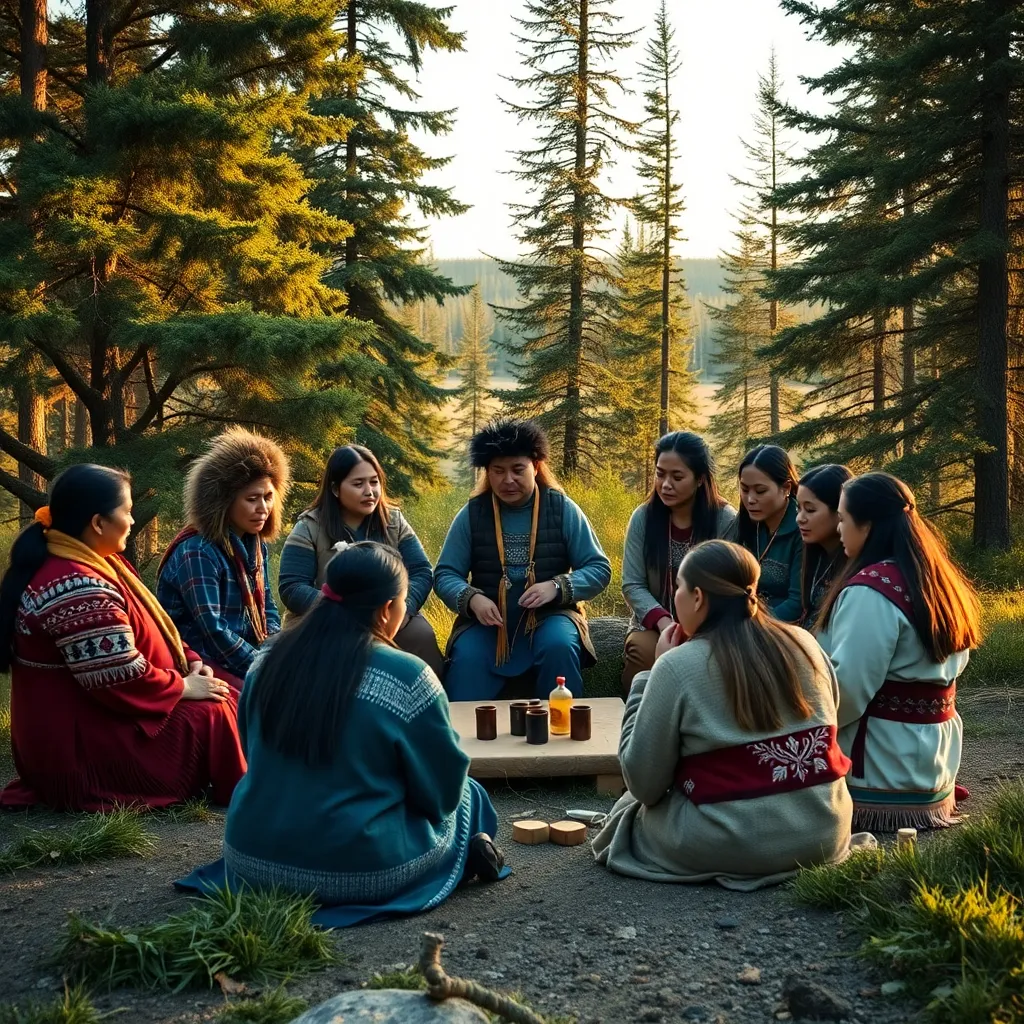
Talking and sharing circles: Structured group healing practices that draw on Indigenous traditions of communal problem-solving, truth-telling, and collective healing. These circles create a safe space for people to speak their truth, be witnessed, and receive support from community members.
Connection to elders: In Alaska Native traditions, elders hold wisdom, cultural knowledge, and healing power. Connections to elders — who can share traditional knowledge, provide counsel, and model sobriety — are recognized as protective against substance use and supportive of recovery.
Subsistence practices: Hunting, fishing, berry picking, gathering — the seasonal subsistence practices of Alaska Native people are deeply connected to identity, community, and mental health. Participation in subsistence activities has been associated with improved wellbeing and recovery outcomes. Programs that connect people in recovery to subsistence activities honor this relationship.
Language revitalization: Speaking one’s ancestral language has been associated with improved mental health, sense of identity, and recovery outcomes in Indigenous communities. Language revitalization programs are both cultural preservation and public health intervention.
Spiritual and ceremonial practices: Many Alaska Native spiritual and ceremonial traditions have healing dimensions that are appropriate to recovery.
The Indian Health Service and IHS Behavioral Health
The Indian Health Service (IHS) provides health care services to federally recognized tribes and their members. In Alaska, IHS services are largely operated by tribal health organizations under self-governance compacts — meaning the tribes themselves control and operate the healthcare system rather than a federal bureaucracy.
IHS-funded behavioral health services in Alaska include substance use disorder treatment, mental health counseling, crisis services, and prevention programs. Alaska Native people who are enrolled members of federally recognized tribes are generally eligible for IHS services.
The IHS has increasingly invested in culturally grounded behavioral health approaches and has supported the integration of traditional healing with evidence-based clinical care.
Recovery Support and Community Healing
Recovery in Alaska Native communities is not solely an individual endeavor — it is a communal one. Community healing initiatives, sobriety movements, and cultural revitalization efforts have driven remarkable changes in some Alaska Native communities.
The sobriety movement that emerged in Alaska Native communities in the 1970s and 1980s — driven by Alaska Native leaders and communities themselves — represented a powerful grassroots response to the alcohol crisis. Communities that embraced sobriety and cultural revitalization as paired commitments demonstrated that recovery at the community scale is possible.
Peer recovery support programs run by and for Alaska Native people, tribal substance use disorder programs, and Indigenous-led recovery communities all draw on this tradition of community-driven healing.
Getting Help
If you are an Alaska Native person struggling with substance use disorder, reaching out to your tribal health organization is typically the best first step. They understand your culture, know your community, and can connect you with culturally appropriate care.
If you are unsure how to access tribal health services, or if you need support right now, the Alaska Addiction Hotline is available 24 hours a day, 7 days a week. Our counselors are knowledgeable about Alaska Native treatment resources, tribal health organizations, and culturally grounded recovery approaches.
Get Help Today
Recovery in Alaska Native communities is not just possible — it is happening. People are getting sober, reconnecting with their cultures, learning their languages, and healing their families. The path is not easy, but it is real.
Call our hotline now — free, confidential, available around the clock. Whether you are Alaska Native or non-Native, whether you are in Anchorage or a remote village, our counselors are here to help you find the right resources for your situation. Healing begins with one step.
Continue Reading

Addiction in Alaska: Understanding a Unique and Serious Public Health Challenge
Alaska faces a multi-substance addiction crisis amplified by geographic isolation, economic challenges, and limited treatment access. This guide covers the scope of the problem and available help.
Alcohol Use Disorder in Alaska: A Deep-Rooted Public Health Emergency
Alaska has some of the highest rates of alcohol use disorder in the nation, with devastating impacts on families and communities statewide. Learn about the crisis, its causes, and treatment.